What Money Still Can't Buy
For seventy-nine minutes on Tuesday night in Atlanta, Egypt had the world champions on the ropes. Argentina, the country of Messi and the holders of the trophy, were two goals down and chasing shadows. Every pass looked rushed, every touch a little more anxious. Egypt, a side almost nobody had backed, played as though they belonged there, because in their own heads they did. Then, in eleven minutes that will be replayed for years, Argentina scored three times to win 3-2, an Enzo Fernandez header in the second minute of stoppage time finally breaking Egyptian hearts1. Argentina survived. But long before the final whistle, something more interesting than the result had already happened.
This World Cup keeps pulling apart one of football's most comfortable assumptions, that the richest teams should always win. We take it almost for granted that bigger budgets, better academies and more famous names must produce better football. This tournament disagrees. Germany are out, beaten by Paraguay. Morocco eliminated the Netherlands. Cape Verde, the smallest country ever to reach a World Cup, dragged the defending champions into a fight nobody thought they could give. These are not flukes. They are a reminder that football is still played by human beings, not by balance sheets.
Consider one moment from Tuesday. Lionel Messi, probably the most decorated footballer who has ever lived, stepped up to a penalty and missed it, saved by an Egyptian goalkeeper, Mostafa Shobeir, whose name most of the watching world had not known an hour earlier. For a few seconds the entire hierarchy of the sport turned upside down. All the trophies in the world promise nothing about the next ninety minutes. That is football's cruelty and its beauty at once.
I say all this as someone who has spent thirteen years in sport, most of it on a basketball court, and the last couple of years helping to coach children much younger than me. You learn fast what money can and cannot do. It can buy almost everything the modern game is supposed to need: academies, nutritionists, data analysts, recovery technology, even the best sports psychologists alive. The one thing it cannot buy is the feeling that a single match might change your whole life.
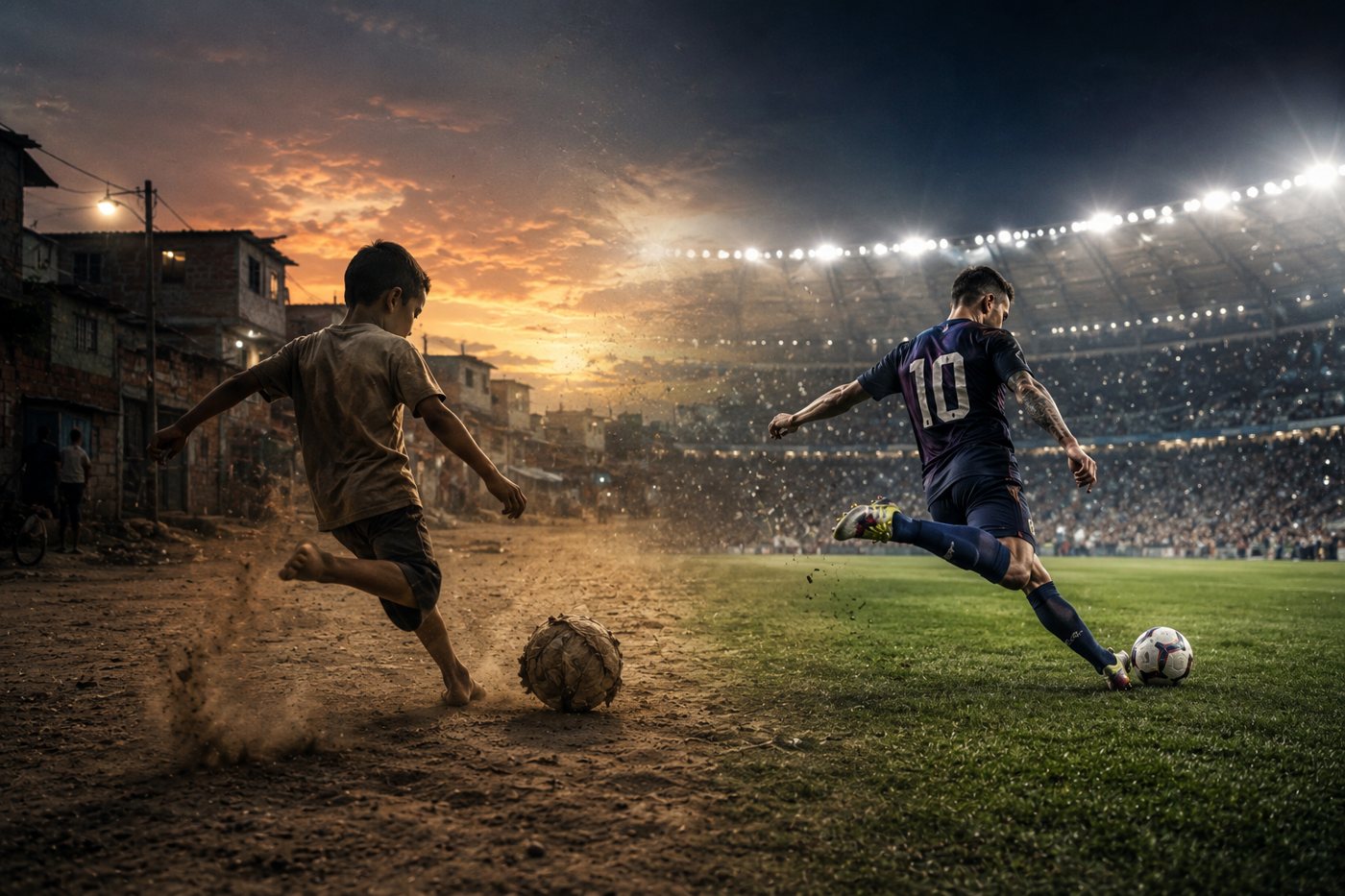
For many players from smaller footballing nations, that feeling is the entire point. Some grew up in homes where sport was the only realistic way out. Others carry communities that almost never see themselves on a stage this size. They know that winning is measured not only in trophies but in what it opens up for a family, a town, a younger sibling watching from home. When that is your reality, motivation stops being a word on a dressing-room wall. You are not simply playing a match. You are defending a future.
It would be easy, and wrong, to romanticise this. Poverty is not a training plan, and hunger in the literal sense ends far more careers than it ever starts. What seems to travel with these teams is not deprivation but meaning. Sports psychologists have spent decades chasing a simple question: why do some people keep pushing long after others stop? One of the strongest answers is Self-Determination Theory, which argues that we sustain our greatest effort when we act out of purpose, belonging and a real sense of ownership, not for money or status alone2. We go furthest, in other words, not for what we earn but for what our effort means. A player protecting a reputation and a player building a future are chasing two different things, and the second is far harder to stop.
Being written off can even become fuel. Research on the so-called underdog effect has found that low expectations from others can actually lift performance, driven by a stubborn urge to prove them wrong, though only while you refuse to believe the doubters yourself3. The moment you suspect they might be right, the same doubt begins to crush you. It is a fine line, and this summer several teams have walked it beautifully. Paraguay never looked grateful just to be there. Egypt spent almost eighty minutes certain they could beat Argentina. Belief changed the way they played.
Watch closely and you start to see two mentalities on the same pitch. One is trying not to lose something it already owns. The other is trying to win something it has never had. Comfort, it turns out, can quietly satisfy ambition. Purpose rarely does. Some players have every resource football can offer. Others have something no academy can provide: the certainty that this chance may never come again. That certainty produces a kind of will that no salary and no motivational consultant has ever quite been able to manufacture.
So what should we do with this, beyond admiring it from the stands? The lazy conclusion is that hardship builds champions, so we should leave gifted kids to claw their way up alone. That is exactly backwards. Every young athlete deserves proper coaching, safe facilities, an education and enough to eat, and Europe should keep widening access to sport rather than narrowing it. The harder lesson is about what we protect while we do that. When we pour resources into a promising player, we often strip away by accident the very things that made them hungry in the first place: their ownership of the game, their bond with where they come from, the sense that they are playing for something larger than themselves. If Self-Determination Theory is right, the smartest football nations will not simply buy better facilities. They will guard meaning as carefully as they guard money, hand young players real responsibility instead of treating them as assets, and build mental-health support that grows motivation from the inside rather than only managing pressure from the outside.
There is one last thing this tournament is teaching, and it feels especially European. Many of the teams tearing up the script are built on players with more than one home, footballers born in one country, raised in another, playing for the nation of a parent or a grandparent. They are living proof that belonging is not only about the place printed in a passport. Sometimes it is about where your heart decides to stand when the anthem plays. That, far more than any stadium or budget, may be Europe's real strength: not our wealth, not our institutions, but our ability to gather different stories and different dreams behind a shared purpose.
Perhaps that is the real lesson of this World Cup. Money builds better football. Meaning builds better competitors. And every now and then, meaning wins.
Sources
- Argentina 3-2 Egypt, FIFA World Cup 2026 round of 16, match report, ESPN (7 July 2026). espn.com
- Self-Determination Theory, Edward L. Deci and Richard M. Ryan. selfdeterminationtheory.org
- Samir Nurmohamed, "The Underdog Effect: When Low Expectations Increase Performance," Academy of Management Journal (2020). journals.aom.org
This piece was first published by United Citizens of Europe. See the visual summary on Instagram.
Timp de șaptezeci și nouă de minute, marți seara, la Atlanta, Egiptul i-a avut la mână pe campionii mondiali. Argentina, țara lui Messi și deținătoarea trofeului, era condusă cu două goluri și alerga după umbre. Fiecare pasă părea grăbită, fiecare atingere puțin mai anxioasă. Egiptul, o echipă pe care aproape nimeni nu pariase, juca de parcă îi era locul acolo - pentru că, în mintea lor, chiar așa era. Apoi, în unsprezece minute care vor fi reluate ani de zile, Argentina a înscris de trei ori și a câștigat cu 3-2, iar o lovitură de cap a lui Enzo Fernández, în minutul al doilea al prelungirilor, a frânt în cele din urmă inimile egiptenilor1. Argentina a supraviețuit. Dar, cu mult înainte de fluierul final, se întâmplase deja ceva mai interesant decât rezultatul.
Acest Campionat Mondial destramă, meci după meci, una dintre cele mai comode presupuneri din fotbal: că echipele cele mai bogate ar trebui să câștige mereu. Luăm aproape de bun că bugetele mai mari, academiile mai bune și numele mai celebre produc automat un fotbal mai bun. Turneul acesta nu e de acord. Germania a fost eliminată de Paraguay. Maroc a scos Olanda. Capul Verde, cea mai mică țară care a ajuns vreodată la un Campionat Mondial, i-a târât pe campionii en-titre într-o luptă pe care nimeni nu credea că o pot da. Nu sunt accidente. Sunt o dovadă că fotbalul e încă jucat de oameni, nu de bilanțuri contabile.
Ia un singur moment de marți. Lionel Messi, probabil cel mai premiat fotbalist care a existat vreodată, s-a dus la un penalty și l-a ratat, apărat de un portar egiptean, Mostafa Shobeir, al cărui nume aproape nimeni din fața ecranelor nu îl știa cu o oră mai devreme. Pentru câteva secunde, întreaga ierarhie a sportului s-a răsturnat. Toate trofeele din lume nu promit nimic despre următoarele nouăzeci de minute. Asta e, deopotrivă, cruzimea și frumusețea fotbalului.
Spun toate astea ca cineva care a petrecut treisprezece ani în sport, cea mai mare parte pe un teren de baschet, iar în ultimii doi ani ajutând la antrenarea unor copii mult mai mici decât mine. Înveți repede ce pot și ce nu pot face banii. Pot cumpăra aproape tot ce se presupune că îi trebuie jocului modern: academii, nutriționiști, analiști de date, tehnologie de recuperare, chiar și cei mai buni psihologi sportivi în viață. Singurul lucru pe care nu îl pot cumpăra este sentimentul că un singur meci ți-ar putea schimba toată viața.
Pentru mulți jucători din națiuni fotbalistice mai mici, acel sentiment este chiar esența. Unii au crescut în case în care sportul era singura cale realistă de scăpare. Alții duc pe umeri comunități care aproape niciodată nu se văd pe o scenă de asemenea anvergură. Ei știu că victoria se măsoară nu doar în trofee, ci în ce deschide ea pentru o familie, un oraș, un frate mai mic care privește de acasă. Când asta e realitatea ta, motivația încetează să mai fie un cuvânt scris pe peretele vestiarului. Nu joci pur și simplu un meci. Aperi un viitor.
Ar fi ușor - și greșit - să romanțăm asta. Sărăcia nu e un plan de antrenament, iar foamea, la propriu, curmă mult mai multe cariere decât pornește. Ceea ce pare să însoțească aceste echipe nu e lipsa, ci sensul. Psihologii sportivi au urmărit zeci de ani o întrebare simplă: de ce unii oameni continuă să împingă mult după ce alții se opresc? Unul dintre cele mai puternice răspunsuri este Teoria autodeterminării, care susține că ne susținem cel mai mare efort atunci când acționăm din scop, apartenență și un sentiment real de proprietate, nu doar pentru bani sau statut2. Mergem cel mai departe, cu alte cuvinte, nu pentru ce câștigăm, ci pentru ce înseamnă efortul nostru. Un jucător care își apără o reputație și un jucător care își construiește un viitor urmăresc două lucruri diferite, iar pe al doilea e mult mai greu să îl oprești.
A fi desconsiderat poate deveni chiar combustibil. Cercetările despre așa-numitul efect al outsiderului au arătat că așteptările scăzute ale celorlalți pot chiar ridica performanța, împinse de dorința încăpățânată de a le dovedi contrariul - însă doar atât timp cât refuzi tu însuți să îi crezi pe cei care se îndoiesc3. În clipa în care bănuiești că ar putea avea dreptate, aceeași îndoială începe să te strivească. E o linie fină, iar vara aceasta câteva echipe au mers pe ea impecabil. Paraguay nu a părut niciodată doar recunoscător că e acolo. Egiptul a petrecut aproape optzeci de minute convins că poate învinge Argentina. Credința a schimbat felul în care au jucat.
Privește cu atenție și începi să vezi două mentalități pe același teren. Una încearcă să nu piardă ceva ce deține deja. Cealaltă încearcă să câștige ceva ce nu a avut niciodată. Confortul, se dovedește, poate satisface în tăcere ambiția. Sensul, rareori. Unii jucători au fiecare resursă pe care fotbalul o poate oferi. Alții au ceva ce nicio academie nu poate da: certitudinea că această șansă s-ar putea să nu mai vină niciodată. Acea certitudine produce un fel de voință pe care niciun salariu și niciun consultant motivațional nu a reușit vreodată să o fabrice.
Așadar, ce ar trebui să facem cu asta, dincolo de a o admira din tribune? Concluzia leneșă e că greul construiește campioni, așa că ar trebui să lăsăm copiii talentați să se zbată singuri până sus. E exact pe dos. Fiecare tânăr sportiv merită antrenament ca lumea, condiții sigure, o educație și destulă mâncare, iar Europa ar trebui să lărgească accesul la sport, nu să îl înguste. Lecția mai grea e despre ce protejăm în timp ce facem asta. Când turnăm resurse într-un jucător promițător, deseori îi smulgem din greșeală tocmai lucrurile care l-au făcut flămând la început: proprietatea lui asupra jocului, legătura cu locul din care vine, sentimentul că joacă pentru ceva mai mare decât el. Dacă Teoria autodeterminării are dreptate, cele mai inteligente națiuni fotbalistice nu vor cumpăra pur și simplu facilități mai bune. Vor păzi sensul la fel de atent cum păzesc banii, vor da tinerilor jucători responsabilitate reală în loc să îi trateze ca pe niște active și vor construi sprijin de sănătate mintală care crește motivația din interior, nu doar gestionează presiunea din exterior.
Mai e un lucru pe care ni-l arată acest turneu și care pare deosebit de european. Multe dintre echipele care rup scenariul sunt clădite pe jucători cu mai mult decât o singură casă - fotbaliști născuți într-o țară, crescuți în alta, jucând pentru națiunea unui părinte sau a unui bunic. Sunt dovada vie că apartenența nu ține doar de locul tipărit într-un pașaport. Uneori ține de locul în care inima ta alege să stea când răsună imnul. Asta, mult mai mult decât orice stadion sau buget, ar putea fi adevărata forță a Europei: nu bogăția noastră, nu instituțiile noastre, ci capacitatea de a aduna povești diferite și vise diferite în spatele unui scop comun.
Poate că asta e adevărata lecție a acestui Campionat Mondial. Banii construiesc un fotbal mai bun. Sensul construiește competitori mai buni. Și, din când în când, sensul câștigă.
Surse
- Argentina 3-2 Egipt, Campionatul Mondial 2026, optimile de finală, cronica meciului, ESPN (7 iulie 2026). espn.com
- Teoria autodeterminării, Edward L. Deci și Richard M. Ryan. selfdeterminationtheory.org
- Samir Nurmohamed, „The Underdog Effect: When Low Expectations Increase Performance", Academy of Management Journal (2020). journals.aom.org
Articol publicat inițial de United Citizens of Europe. Vezi sinteza vizuală pe Instagram.