THE FAKE NEWS FACTORY

About the project
The Fake News Factory is an interactive media-literacy project that teaches you how online disinformation is built - so you can recognise and neutralise it. It is based on prebunking, a method developed and validated by the University of Cambridge and Google Jigsaw.
I conceived, designed and built the whole project myself - from the academic research behind the method, to every line of code of the two web pages, the bilingual translations, the visual materials and the accompanying teaching notes.
How it started
It all began with a simple assignment in my Social Studies class, from my teacher Mrs Grigore Gabriela-Amalia: “Build a project about disinformation that you would present to your classmates.” Instead of a poster or a slideshow, I chose a radically different approach: I built an interactive simulator where anyone - a classmate, a teacher or a parent - can step into the role of a fake-news producer and build a manipulative story, step by step. The idea was simple but powerful: you cannot recognise a trap you have never experienced from the inside.
When I started, it never crossed my mind that the project might leave the walls of the classroom. In a few weeks of intense work, it became much bigger than a school assignment.
How it works - two pages, one ecosystem
The Simulator
The main page turns you, step by step, into a fake-news producer. You build a manipulative story using the 6 classic techniques studied at Cambridge and Google Jigsaw, see how social-media algorithms amplify it, and finish with a 5-second filter and a concrete checklist you can use whenever you spot suspicious content online.
looksmart.ro/fakenewsfactoryThe Fact-Checker
The second page turns theory into practice. You paste a story, headline or post that looks suspicious, and the checker shows you whether the text uses any of the 6 manipulation techniques - with the exact words found and an educational risk score. It never rules “true” or “false” (that's a journalist's job); it only tells you how manipulative the writing is and recommends 5 concrete verification steps. Everything stays in your browser - nothing is sent or stored.
looksmart.ro/fakenewsfactory/fact-check.htmlThe competition & the result
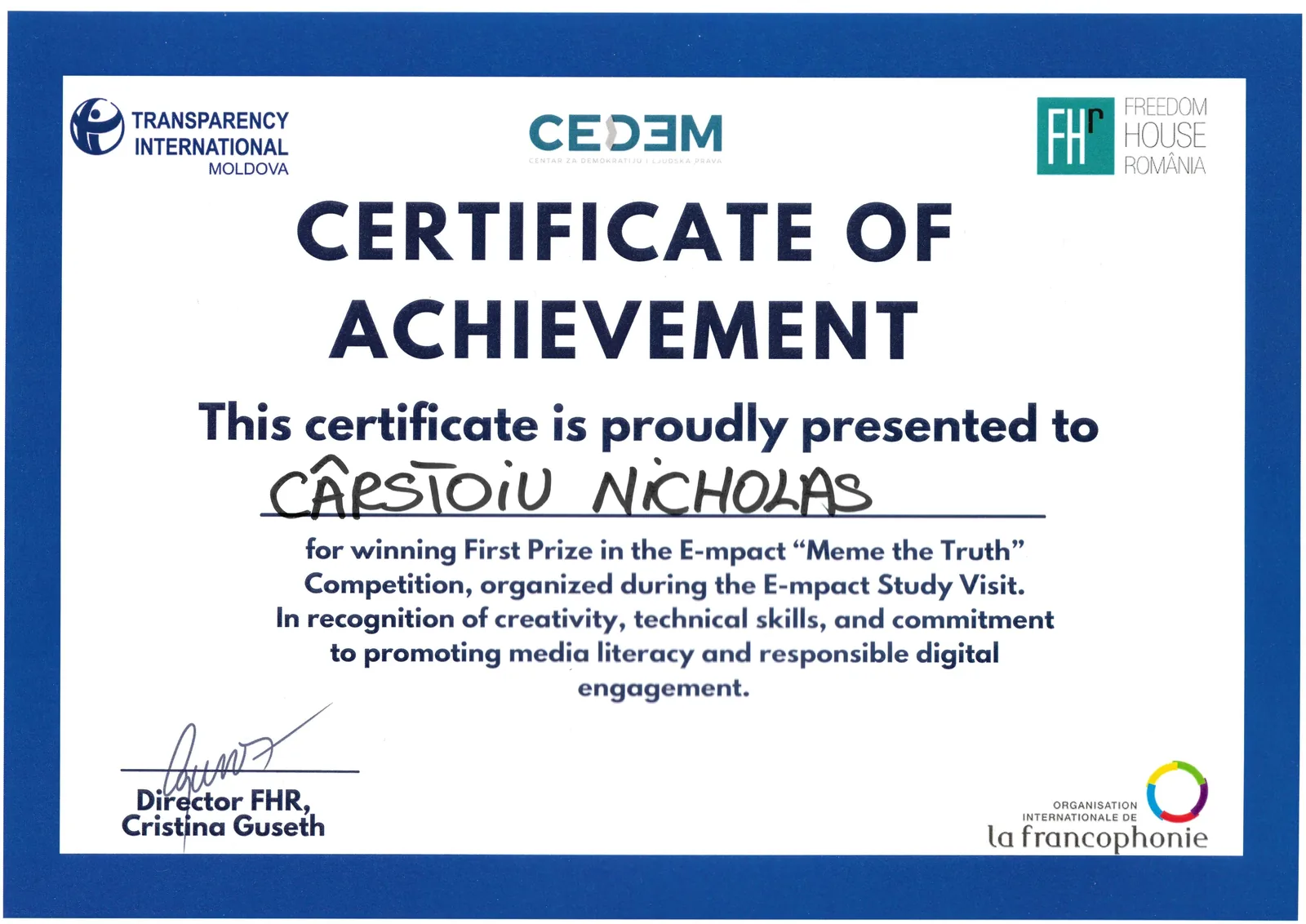
I entered the project in «Mème la vérité: Démasque la désinfo», a regional competition organised by Freedom House Romania together with the Center for Democracy and Human Rights (Montenegro) and Transparency International Moldova, with the support of the Organisation internationale de la Francophonie. It was open to high-school students from Romania, Moldova and Montenegro, as part of the regional project E-MPACT - Mobilization Against Disinformation.
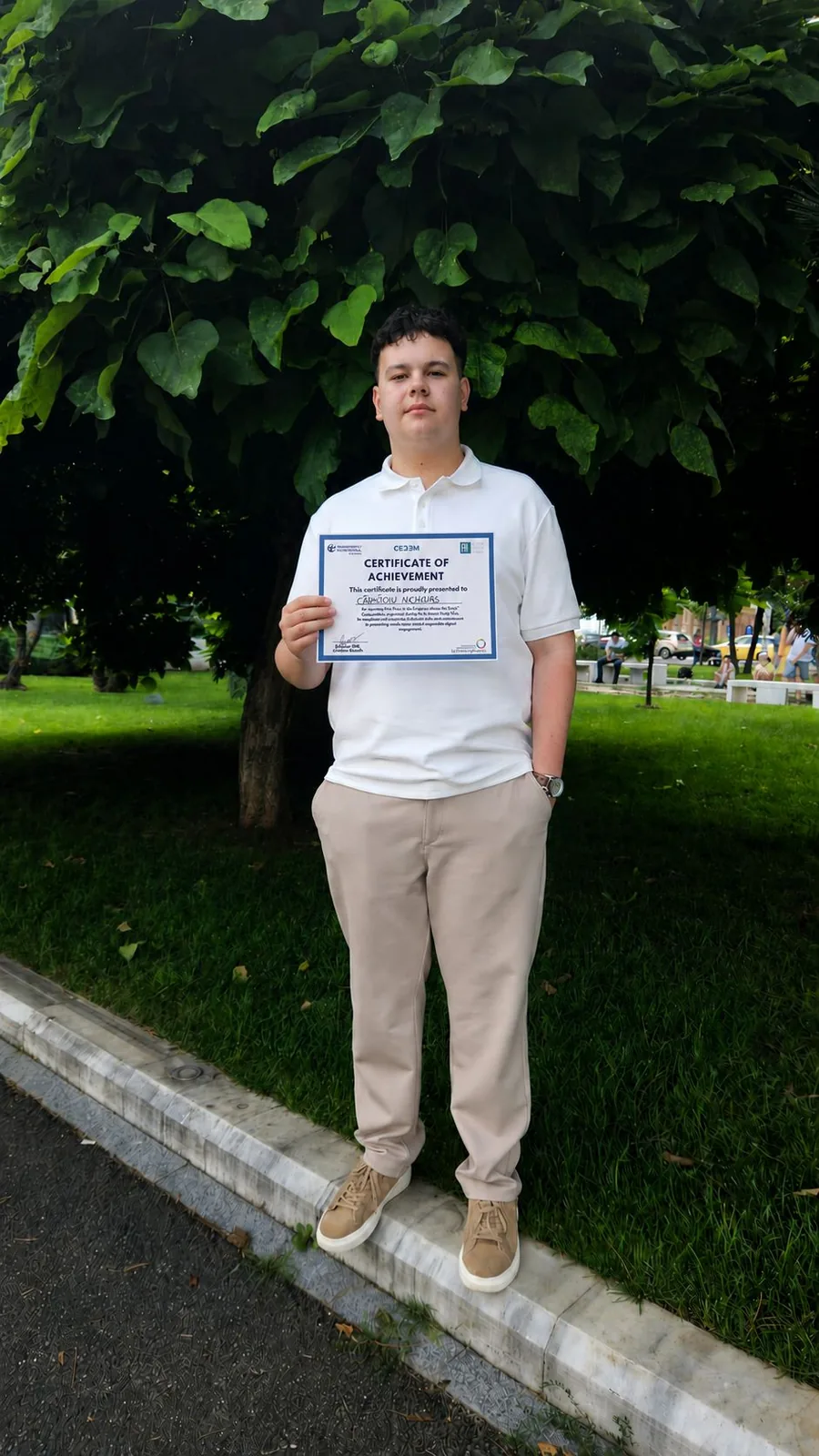
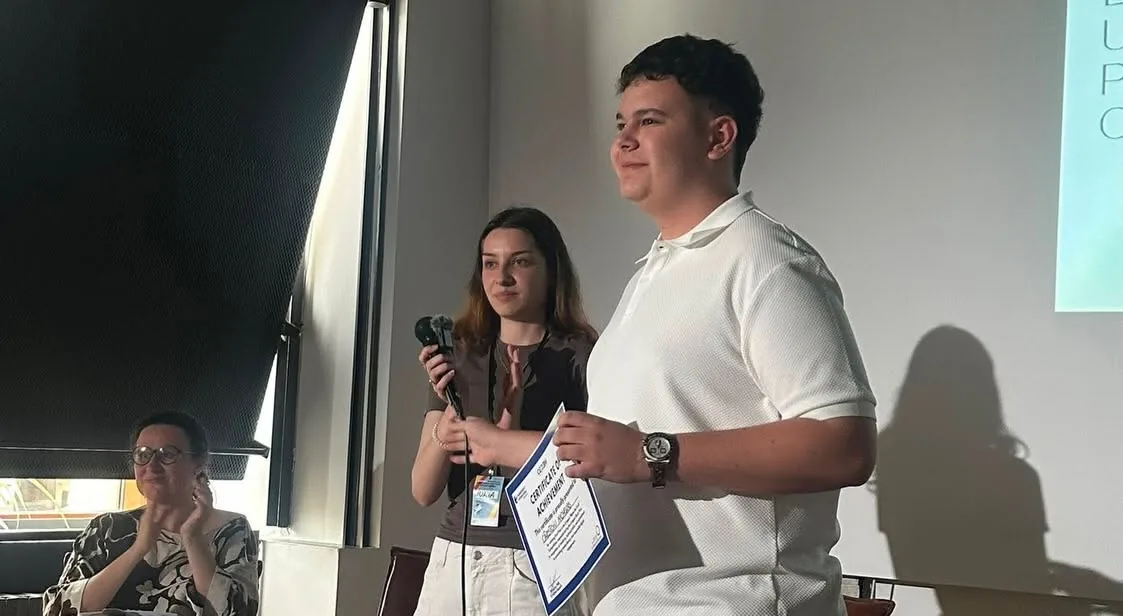
In early July 2026, The Fake News Factory was designated a winner of the «Mème la vérité: Démasque la désinfo» competition. As part of the prize, I was invited to the international study visit in Bucharest, alongside the other winners from Romania, Moldova and Montenegro - including meetings with journalists, disinformation experts and civic organisations.
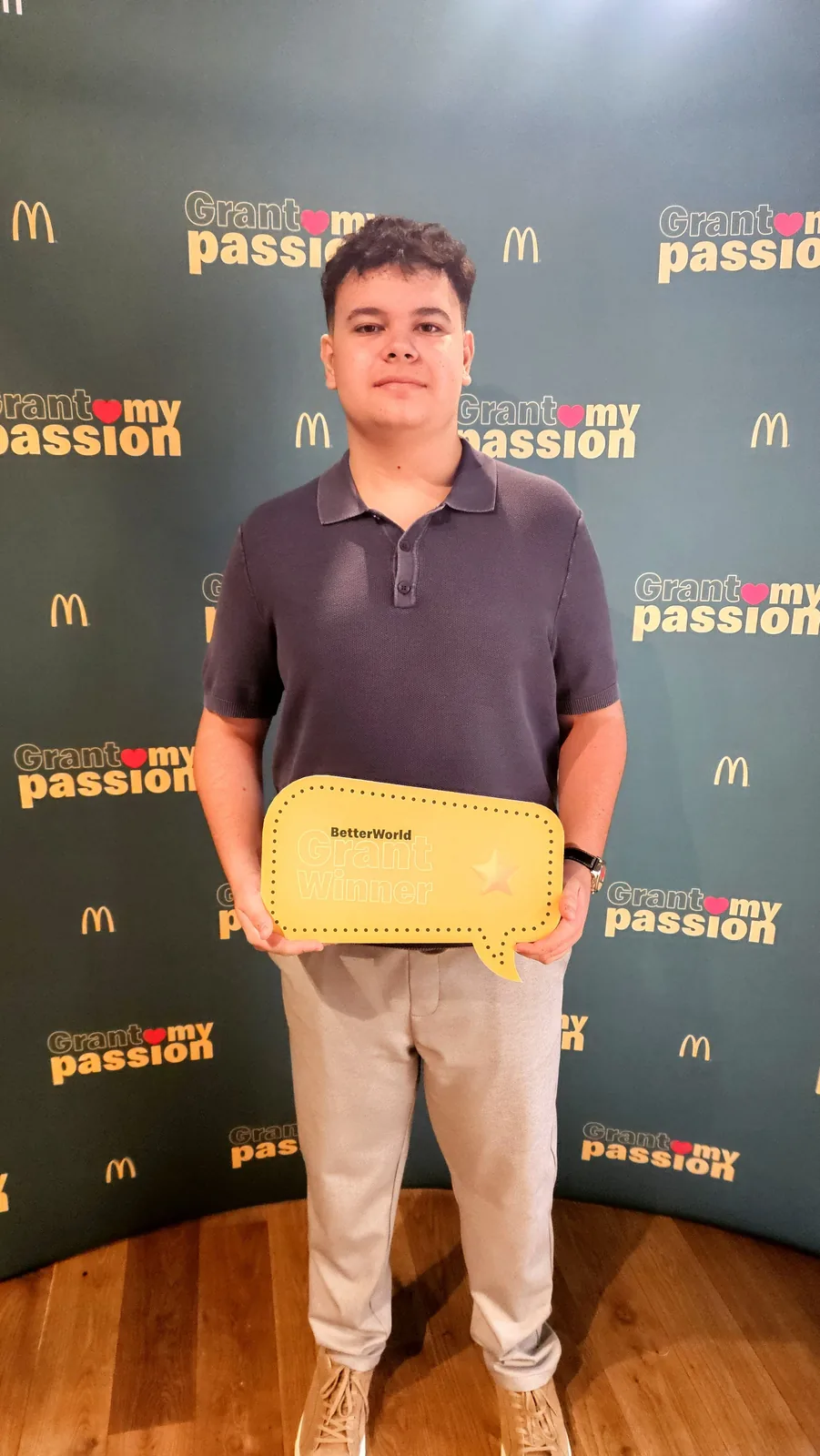
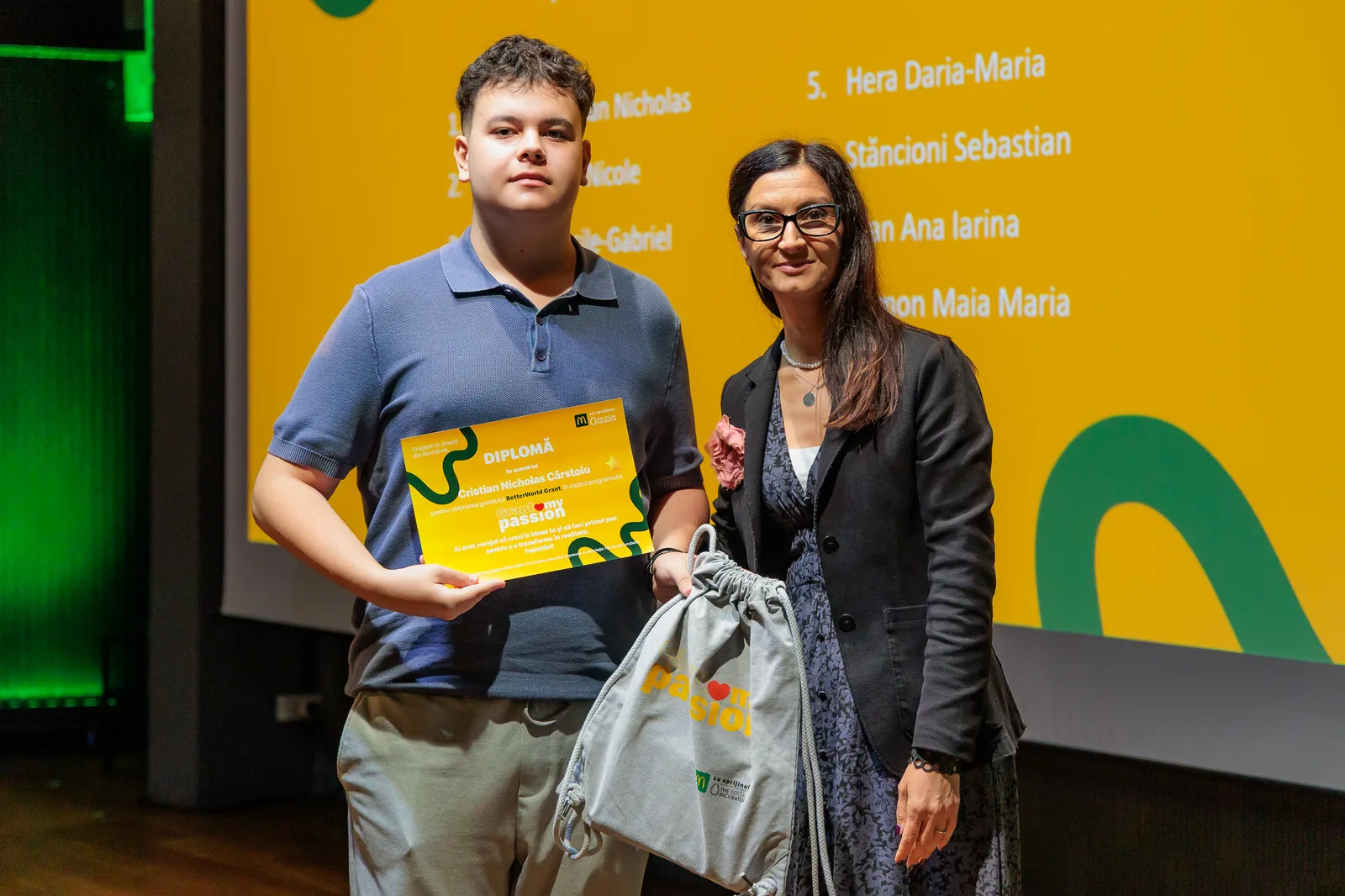
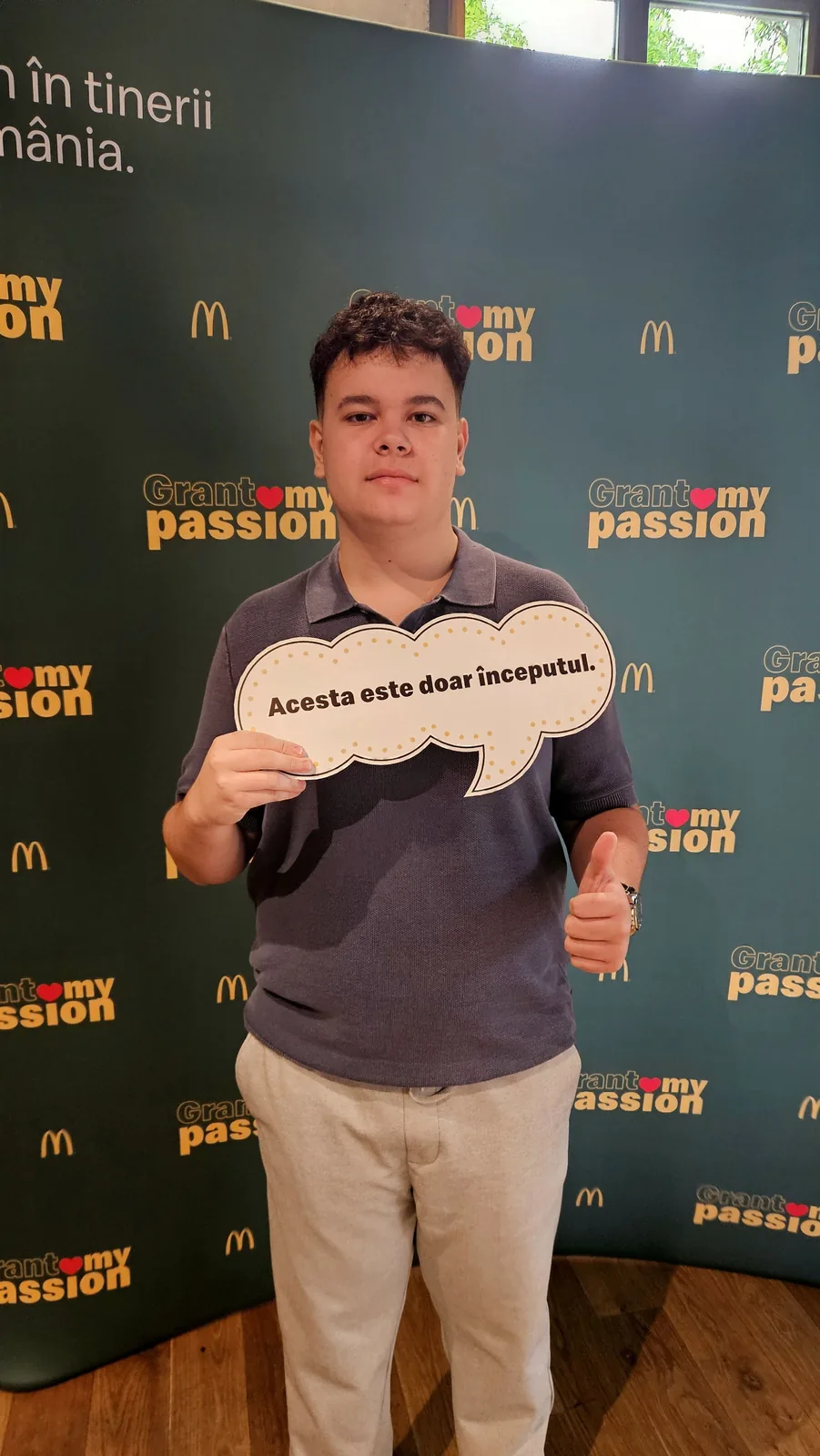
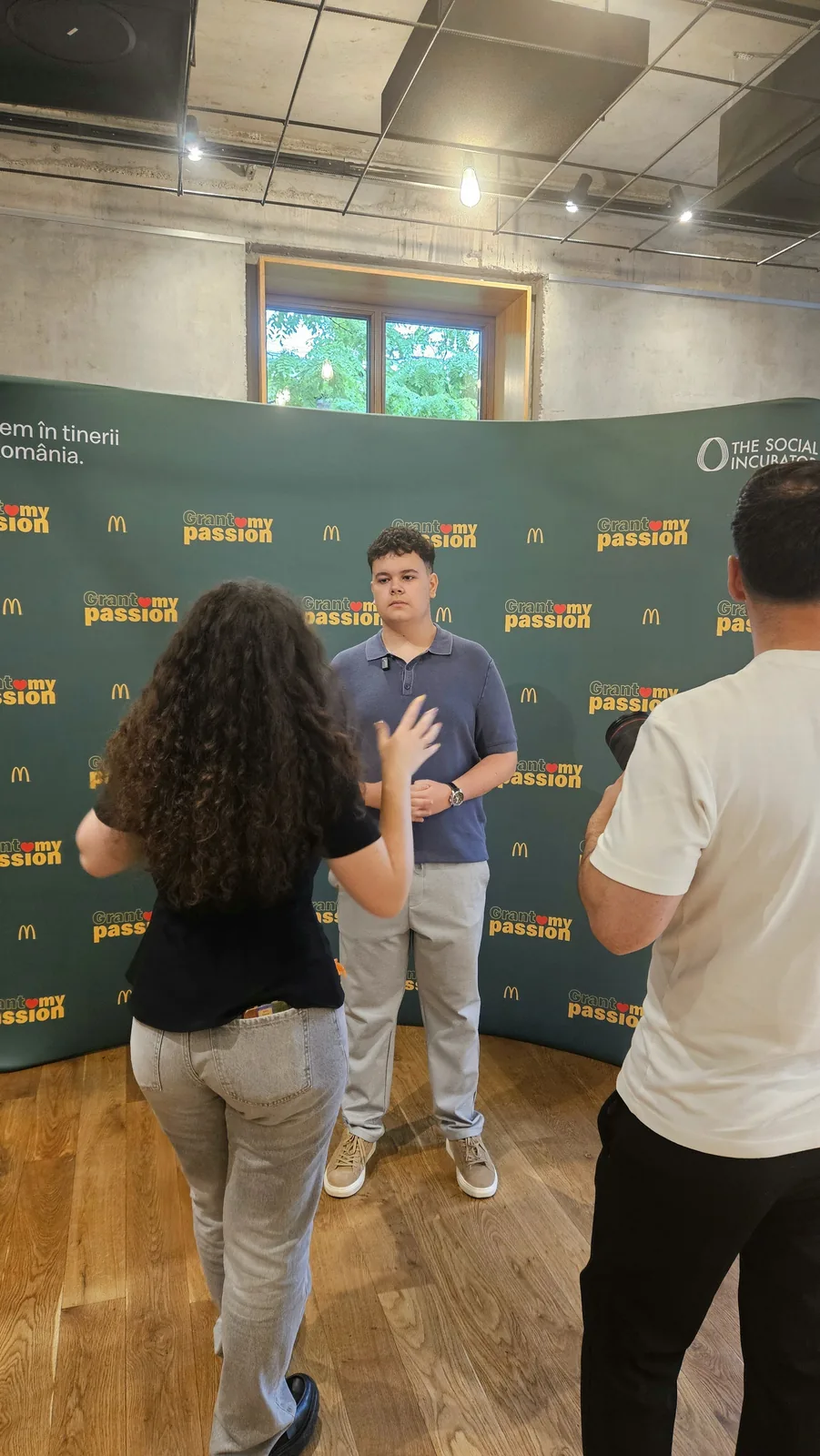
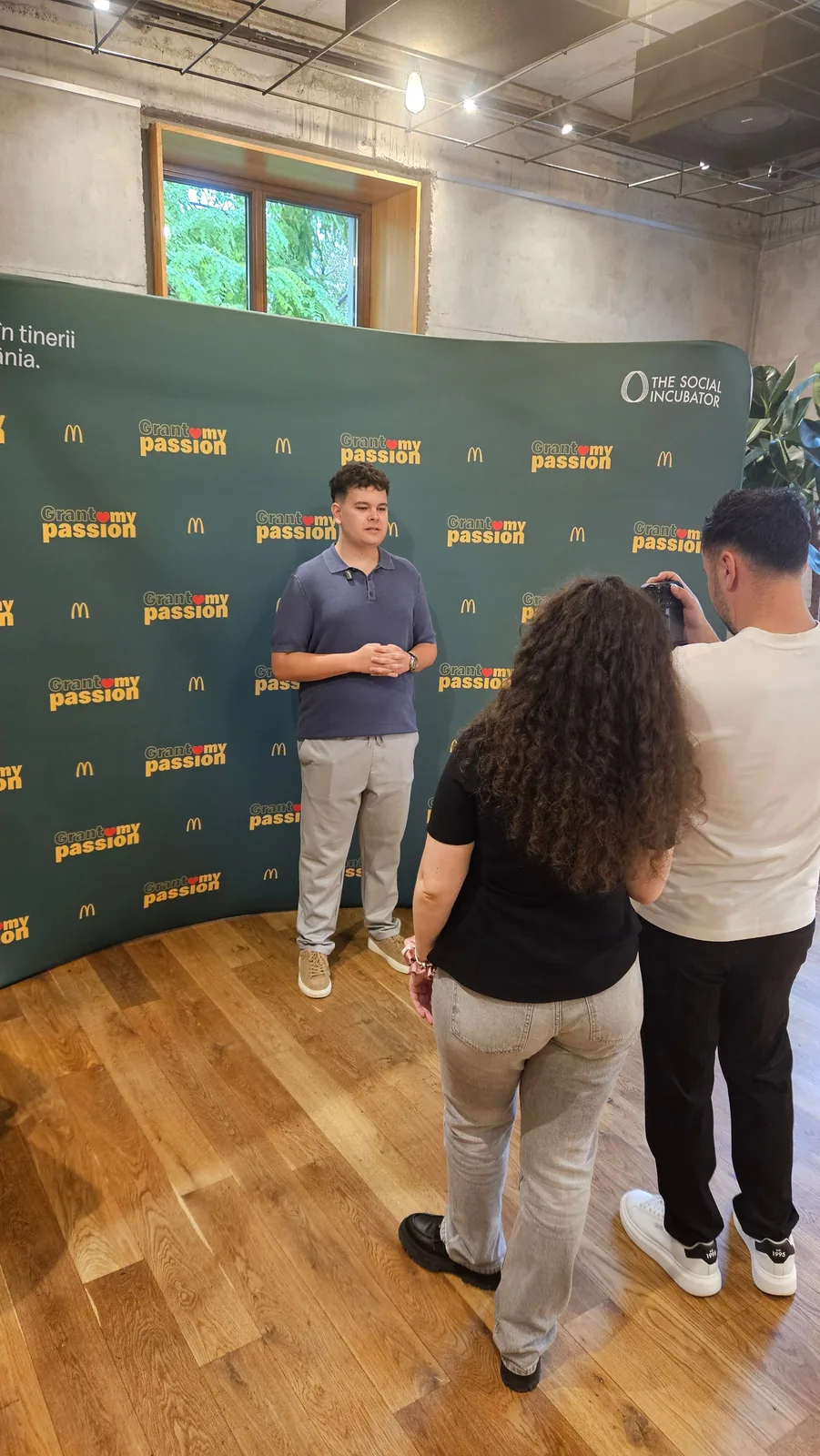
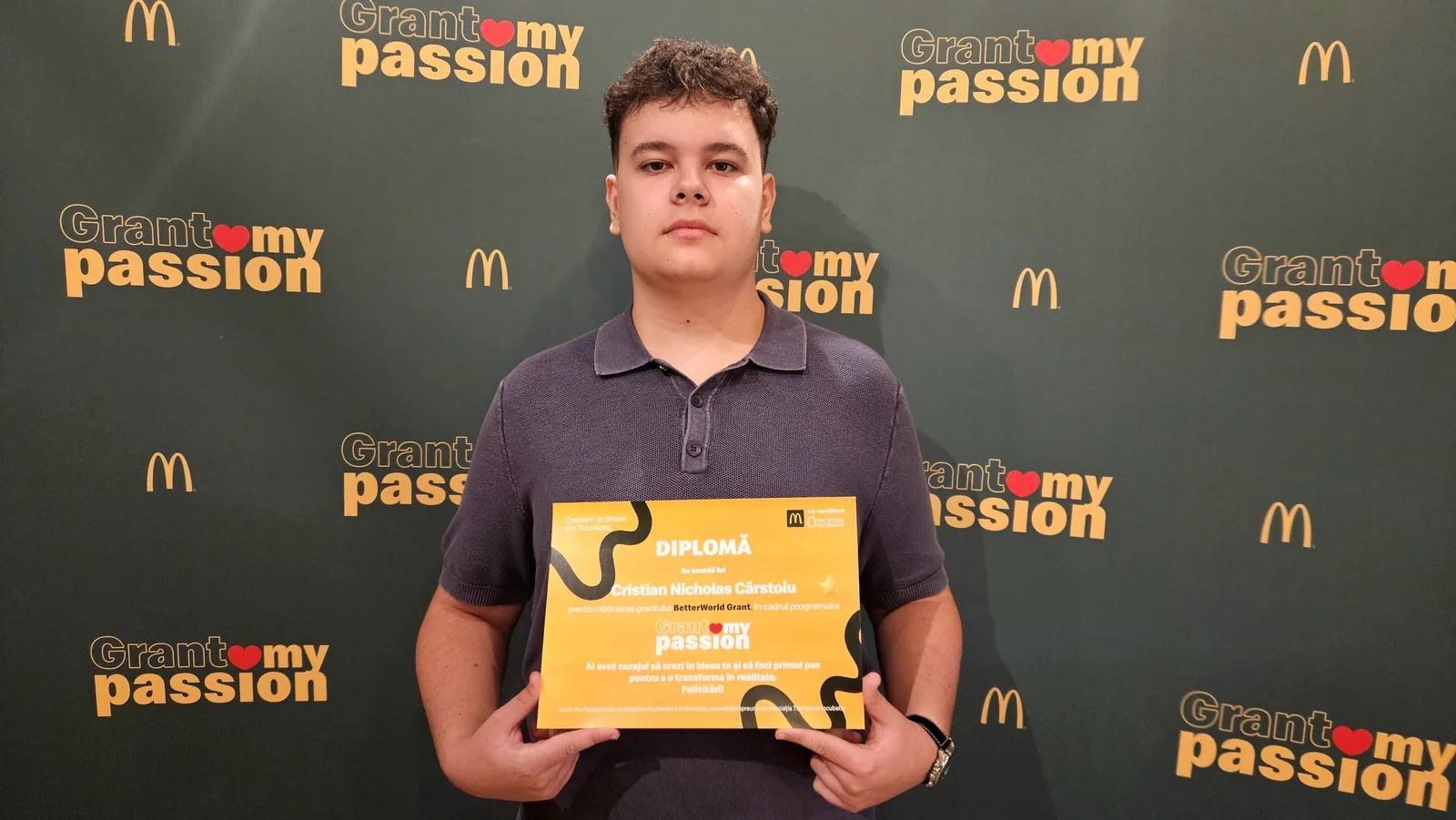
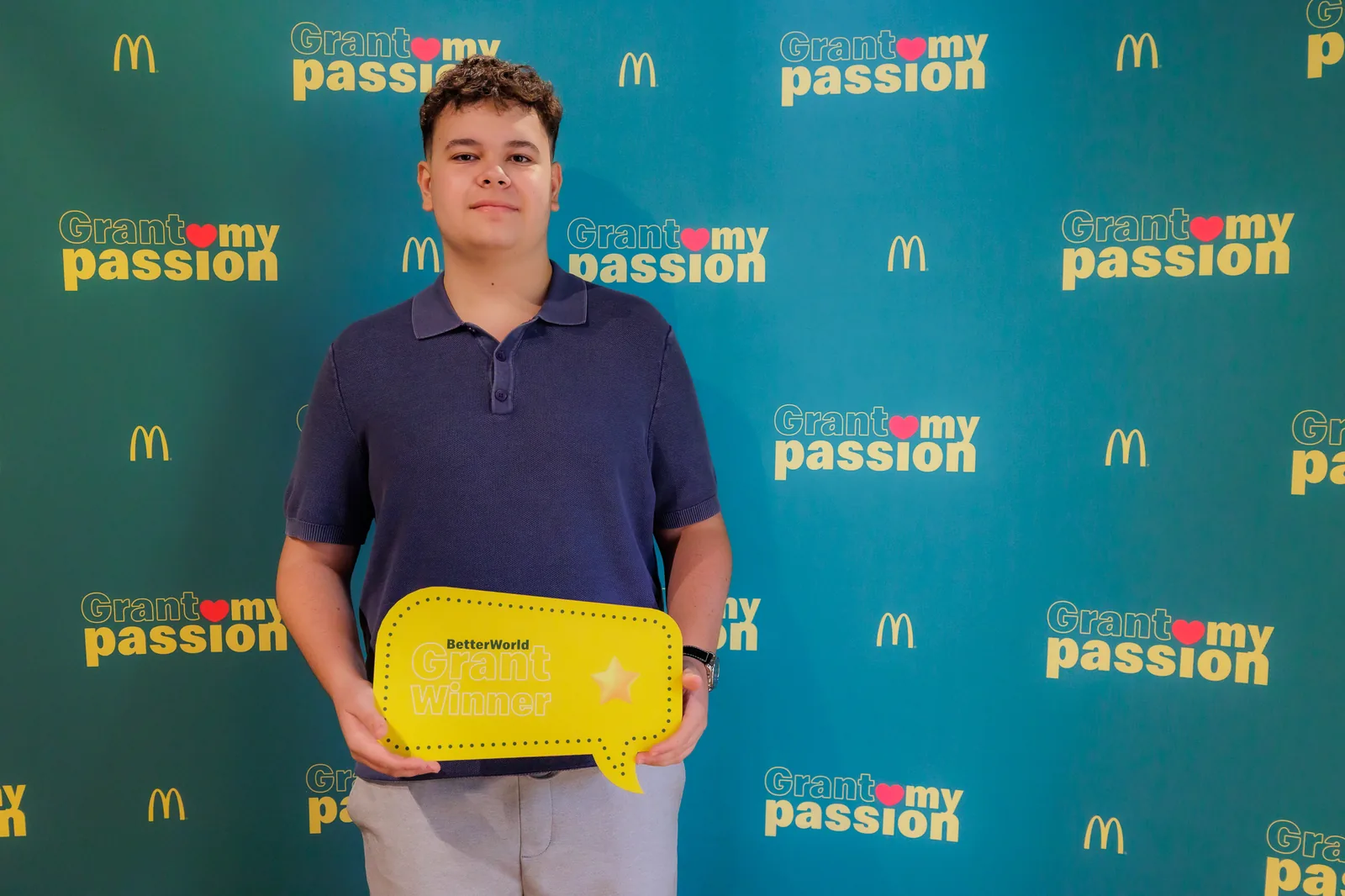
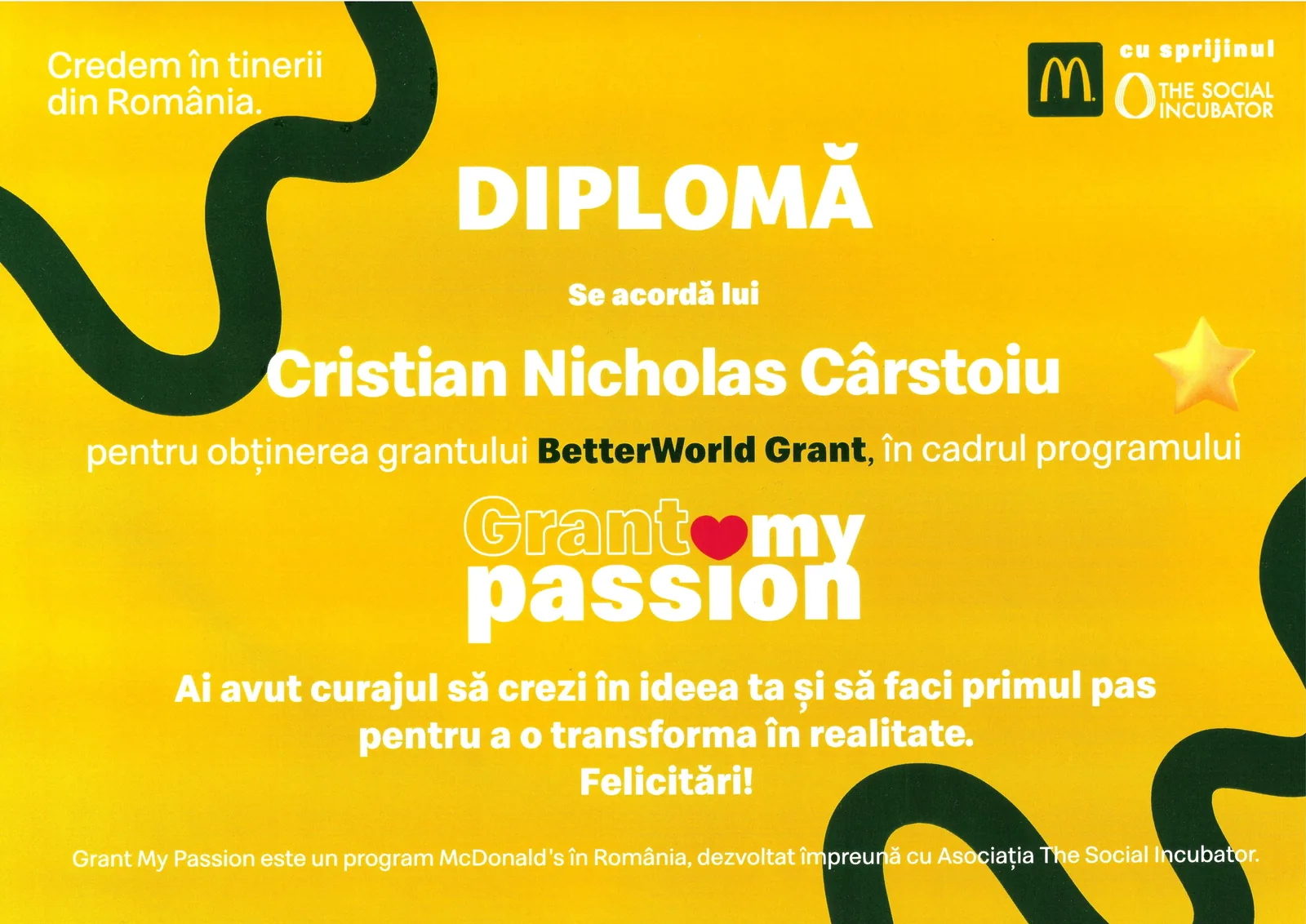
In July 2026, The Fake News Factory earned a second distinction: the Better World grant of Grant My Passion 2026, a national programme run by McDonald's Romania with the support of The Social Incubator, which backs young people whose ideas drive sustainability, social responsibility and real community impact. The project is now a double-award-winning initiative.
What makes it different
It never says what is true or false - that's a journalist's job. It gives you the tools to decide for yourself.
Every page, explanation and material is available in Romanian and English, so it can be used anywhere.
The fact-checker runs entirely in your browser. No text ever leaves your device; nothing is stored.
The prebunking method is validated by studies with thousands of participants (Cambridge, Bristol, Google Jigsaw, Science Advances 2022). The checker covers 700+ Romanian manipulation patterns.
The design, the code, the translations, the visuals, the copywriting - all of it. No template, no auto-generated framework. Line by line.
The 6 vaccine cards
Beyond the simulator and the checker, I built a series of 6 educational memes - “vaccine cards” a teenager can save on their phone or share in seconds. Each one attacks a single manipulation technique with one strong message - the same 6 techniques the simulator teaches from the inside and the checker detects in real texts. A good meme reaches the mind faster than any article, and stays there.


My message
“My generation doesn't have to be the easiest to fool online. It can be the hardest. And I'm doing this with everything I've got - because no one is going to do it for us.”
Questions and answers
What is The Fake News Factory?
The Fake News Factory is an interactive, bilingual media-literacy project created by Nicholas Carstoiu. It shows how online disinformation is manufactured and how to recognise it, using prebunking: you are exposed to the manipulation techniques before you meet them in the wild, so you can resist them.
What is prebunking?
Prebunking means building resistance to manipulation in advance, instead of correcting a false claim after it has already spread. Rather than debunking one piece of disinformation at a time, it teaches the underlying techniques so they can be recognised whenever they appear.
What awards has the project received?
The project is a double winner: it won the Mème la vérité 2026 competition, organised by Freedom House Romania together with the Center for Democracy and Human Rights (Montenegro) and Transparency International Moldova with the support of the Organisation internationale de la Francophonie, and it also won the Grant My Passion 2026 Better World grant, offered by McDonald's Romania and The Social Incubator.
Who can use it?
The project is free and open to everyone, and is built in particular for teenagers, teachers and parents. It works in both Romanian and English.
How does prebunking work?
It works like a mental vaccine. You are shown a weakened dose of a manipulation technique and taught to spot it, so that when you meet the real thing later you recognise and resist it. This is based on inoculation theory in psychology.
What is the difference between misinformation, disinformation and malinformation?
Misinformation is false content shared without intent to harm. Disinformation is false content created deliberately to deceive. Malinformation is true information taken out of context to mislead or harm. The Fake News Factory helps you tell them apart.
Is The Fake News Factory free?
Yes. The project is completely free to use, in both English and Romanian, with no account required.
Can teachers use it in class?
Yes. It is designed to be used in lessons on media literacy, critical thinking and digital citizenship, as a short, interactive activity.
Can parents use it with their children?
Yes. It is suitable for teenagers and families, and it is a simple way to start a conversation at home about what is real online.
How is it different from fact-checking?
Fact-checking corrects a false claim after it spreads. Prebunking, which this project uses, builds resistance in advance by teaching the techniques, so you are protected before you ever see the false claim.
Is there scientific research behind it?
Yes. The prebunking approach is grounded in inoculation theory, studied by researchers such as Sander van der Linden at the University of Cambridge, and used in public campaigns by organisations including Google Jigsaw and the European Commission's EUvsDisinfo.
What manipulation techniques does it cover?
It covers common techniques such as emotional manipulation, false context, fake experts, conspiratorial reasoning, manipulated images and misleading statistics.
What languages is it available in?
It is fully bilingual, available in English and Romanian.
How long does it take?
Going through the experience takes only a few minutes, which makes it easy to use in a single class or at home.
Fake news, misinformation, disinformation, malinformation
"Fake news" is an umbrella term. Researchers use three more precise categories, and The Fake News Factory helps you tell them apart:
| Type | Is it false? | Intent to harm? | Example |
|---|---|---|---|
| Misinformation | Yes | No | Sharing a false health tip believing it is true |
| Disinformation | Yes | Yes | A deliberately fabricated story made to deceive |
| Malinformation | No | Yes | A real private photo leaked out of context to harm someone |
About the creator
The Fake News Factory was created by Nicholas Carstoiu, a Romanian youth leader, writer and public speaker. He is a member of the UNICEF Romania Children's Board and of the Children's Advisory Council of the Bucharest City Hall, Ambassador for Romania of United Citizens of Europe and founder of HANDIFY. This project won the Mème la vérité 2026 competition organised by Freedom House Romania and the Better World grant in Grant My Passion 2026. Read more on his official site.
Credits
- For the «Mème la vérité: Démasque la désinfo» prize: With thanks to Freedom House, organiser together with the Center for Democracy and Human Rights (Montenegro) and Transparency International Moldova, with the support of the Organisation internationale de la Francophonie.


- For the Grant My Passion 2026 - Better World prize: With sincere thanks to McDonald's Romania and The Social Incubator, who invest in young people turning their ideas into real-world impact - and who chose to back this one.


- Mrs Grigore Gabriela-Amalia, Romanian-Finnish High School, Bucharest - who set the assignment this project grew from.

From the award ceremonies
A look inside the two ceremonies where The Fake News Factory was awarded - photos and video from the moments the winners were announced. Tap any photo to open it full size.
Grant My Passion 2026 - Better World (McDonald's Romania)
Gala on 22 July 2026
Mème la vérité: Démasque la désinfo (Freedom House Romania)
Ceremony on 23 July 2026
 The Fake News Factory · built line by line by Nicholas
The Fake News Factory concept, its two web tools, the 6 vaccine cards and all the materials on this page are my own work and intellectual property.
I share them here so my work can be understood and appreciated, and so that future participants and teachers can draw inspiration from them and use them in the classroom.
They may not be copied, reproduced or used commercially without my written permission.